
Invisible Hazards: The Hidden Air Quality Crisis in Indian Kitchens
Behind the rich aromas of spluttering tadka and deep-frying lies an unaddressed indoor air pollution hazard: high concentrations of PM2.5, NO2, and carcinogenic oil vapors.
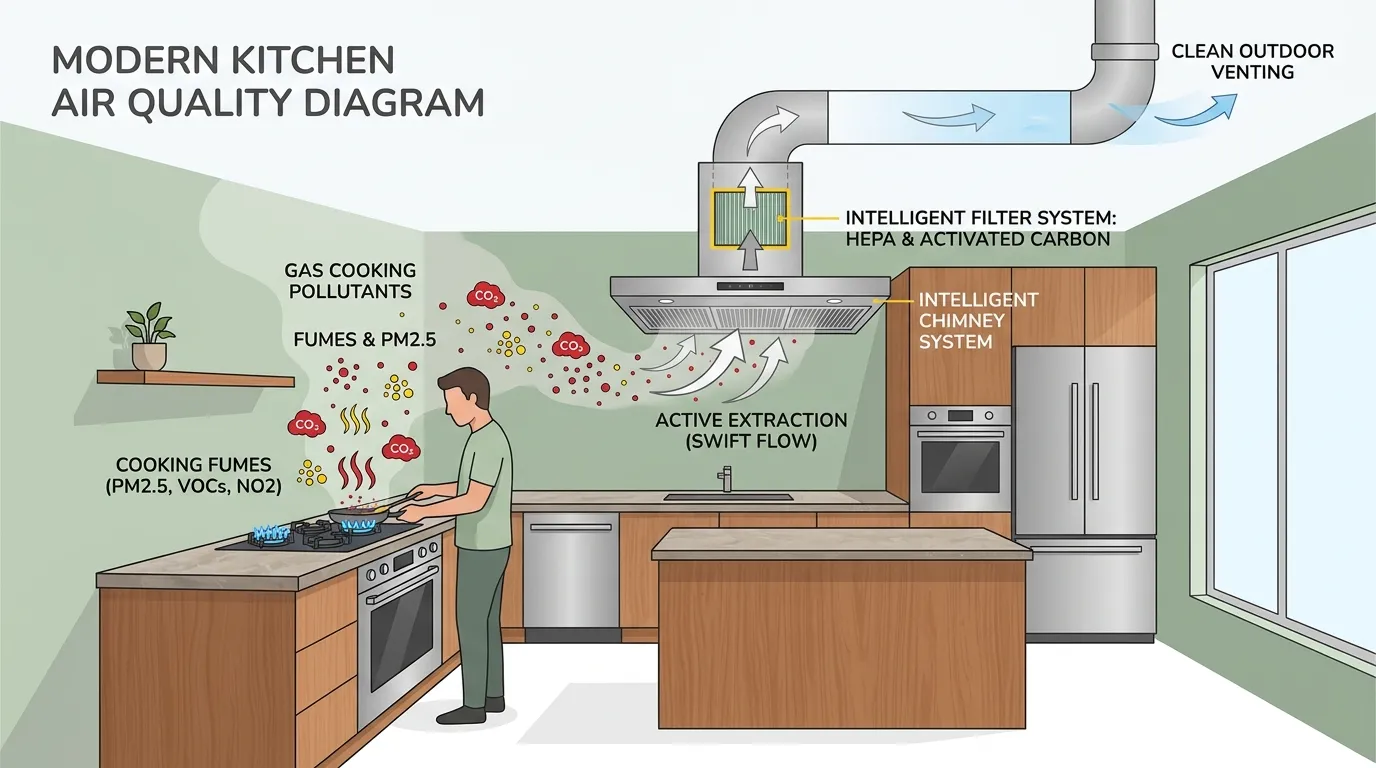
Cooking is at the heart of every Indian home, but behind the familiar aromas of spluttering tadka, slow-roasted spices, and deep-frying lies an unaddressed indoor air pollution hazard. Preparing meals on Liquefied Petroleum Gas (LPG) stoves produces complex chemical emissions, oil vapors, and ultra-fine particles that severely compromise home air quality.
What Gases and Toxins Are Released During Cooking?
When LPG combusts and oil is heated to high temperatures, several harmful substances fill the air:
- Nitrogen Dioxide (NO₂): A major byproduct of gas burner combustion. High concentrations cause airway inflammation, trigger asthma attacks, and reduce lung capacity.
- Carbon Monoxide (CO): Formed during incomplete gas combustion. CO binds to hemoglobin, impairing blood-oxygen transport and causing headaches, dizziness, fatigue, and cardiovascular strain.
- Particulate Matter (PM₂.₅ and Ultrafine Particles): High-heat frying, searing, and spice tempering generate massive bursts of fine soot and oil droplets that penetrate deep into pulmonary alveoli and enter circulation.
- Volatile Organic Compounds (VOCs) & Polycyclic Aromatic Hydrocarbons (PAHs): Thermal breakdown of edible oils creates formaldehyde, acrolein, and carcinogenic PAHs, irritating mucous membranes and elevating cellular stress.
Long-Term Health Impacts of Cooking Fumes
Consistent daily exposure to unventilated kitchen fumes leads to noticeable systemic health consequences:
- Respiratory Ailments: Chronic bronchitis, elevated risk of childhood asthma, persistent dry coughs, and reduced pulmonary function.
- Cardiovascular Strain: Prolonged intake of fine particulate matter and carbon monoxide increases the risk of hypertension and vascular inflammation.
- Systemic Toxic Load: Chronic inhalation of acrolein and oxidized fatty-acid fumes creates systemic oxidative stress and metabolic inflammation.
Essential Chimney Features for a Healthier Indian Kitchen
To maintain clean indoor air and keep ambient temperatures comfortable while cooking, choose a chimney with these essential features:
- High Suction & Smart AQI Monitoring: Indian cooking requires a suction capacity between 1200 m³/hr to 1600 m³/hr to clear heavy smoke and oil particles quickly. Look for units with integrated AQI sensors that automatically adjust fan speed based on pollutant spikes.
- Silent Operation (BLDC Motor Technology): Chimneys with Brushless DC (BLDC) motors operate at significantly lower sound levels (40 dB – 50 dB) compared to older noisy models (65 dB – 70 dB), encouraging consistent daily use.
- Ducted vs. Ductless Ventilation: Whenever feasible, opt for ducted chimneys that vent toxic fumes outdoors. If using ductless, ensure high-grade activated carbon filters combined with HEPA filtration are serviced frequently.
- Thermal & Heat Management: Heat-resistant draft hoods and 100% copper BLDC motors extract hot steam and ambient heat, helping keep kitchen temperatures below 26°C – 28°C.
Dr. Sujata Mittal, Senior Gynaecologic Oncologist & Preventive Health Specialist, Famicare Speciality Centre, Rohini
Frequently Asked Questions
Is Indian cooking smoke as harmful as outdoor smog?
During intense frying or tadka in an unventilated kitchen, indoor PM2.5 levels can spike over 500-1000 µg/m³, which is several times higher than severe outdoor winter smog.
What is the recommended suction power for an Indian kitchen chimney?
A minimum suction capacity of 1200 to 1500 m³/hr is recommended for typical Indian kitchens with frequent frying and spice tempering.
Protect your family's respiratory and cellular health. Learn more about preventive oncology and lifestyle wellness at Famicare.
Related Articles & Latest Clinical Guides
Continue exploring evidence-based oncology, cervical cancer prevention, and wellness insights.
 Preventive Oncology
The Control Panel of Your DNA: How Your Lifestyle Rewrites Your Health
Your DNA is the permanent hardware, but epigenetics provides the software bookmarks. Discover how daily habits can activate tumor suppressor genes and rewrite your health blueprint.
 Cancer Awareness
Demystifying Cancer Jargon: A Plain-English Guide to 8 Essential Terms
Hearing words like angiogenesis, apoptosis, or HER2 can feel overwhelming. Here is an empowering translation of eight essential oncology terms using simple everyday analogies.
 Integrative Oncology
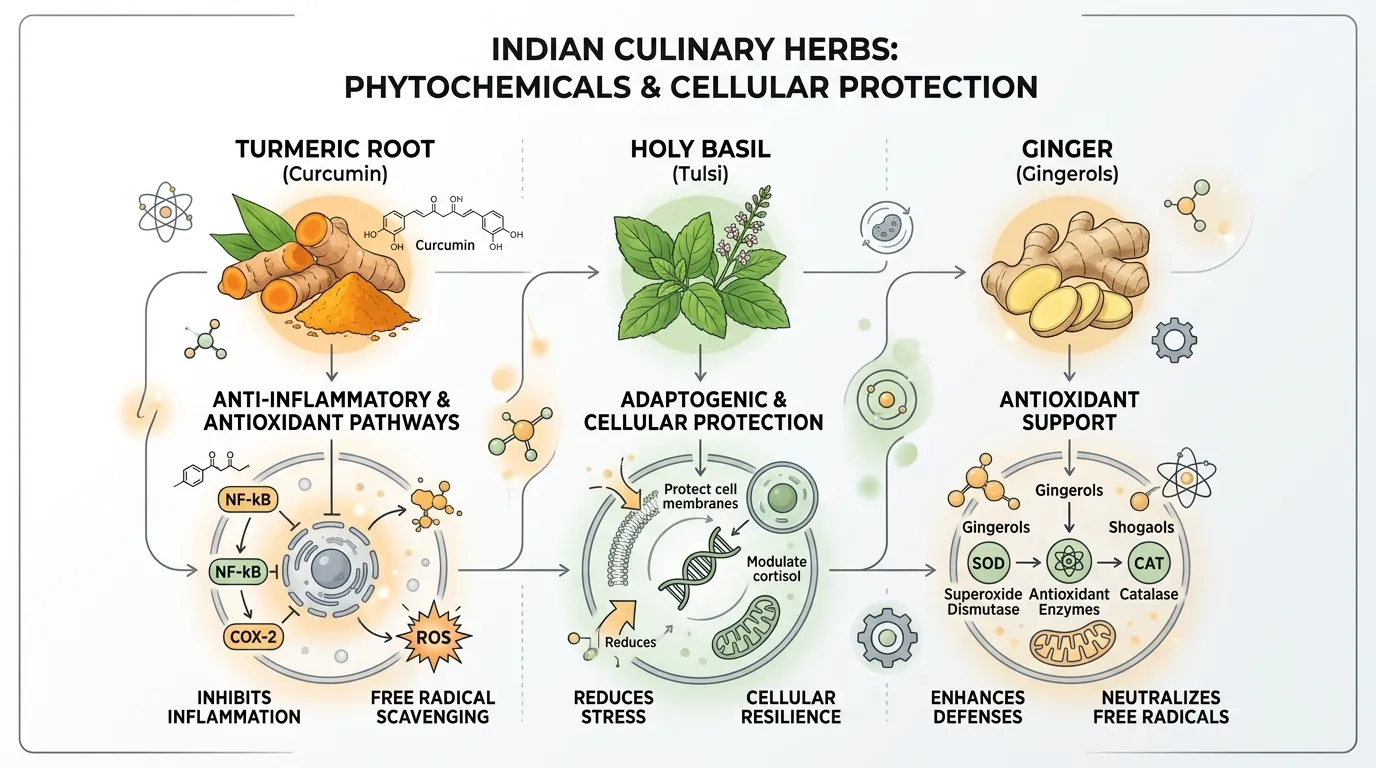
Nature’s Pharmacy: How Common Indian Kitchen Herbs Combat Cancer Hallmarks
Emerging scientific research confirms what traditional medicine has known for centuries: everyday Indian kitchen herbs contain potent bioactive compounds capable of targeting key hallmarks of cancer.