
Which Tests Should a Woman Take? BSE, Mammography, Ultrasound and More
Finding breast cancer early is the most powerful thing a woman can do for herself. Several tests work together, each with its own role.
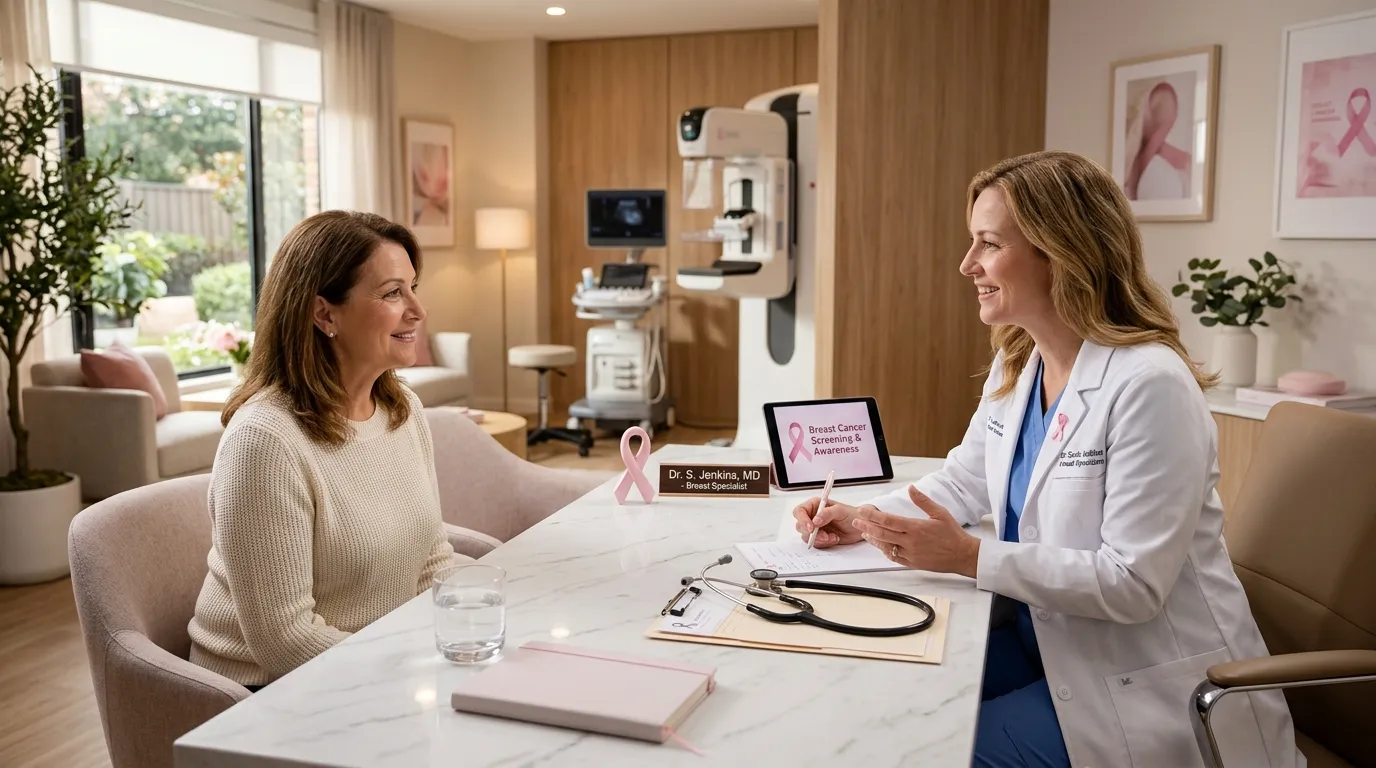
Finding breast cancer early is the most powerful thing a woman can do for herself. Several tests work together, each with its own role.
1. Breast self-examination (BSE), every month
Begin at 20. Choose a day a few days after your period ends, when breasts are least tender; after menopause, pick the same date each month. Look in a mirror with arms down, raised, and hands on hips for swelling, dimpling, redness or a change in nipple shape. Feel while lying down, using the pads of three fingers in small circles, from collarbone to bra line and from breastbone to armpit, pressing lightly and then firmly. Squeeze each nipple gently to check for discharge. BSE does not replace screening, but it makes you familiar with your own normal.
2. Clinical breast examination
Yearly from the age of 30, by a trained doctor.
3. Mammography
This breast X-ray is the best-proven screening test. Most guidelines advise starting between 40 and 45 and repeating every one to two years; start earlier if a close relative had breast or ovarian cancer. 3D mammography (tomosynthesis) can improve detection in dense breasts.
4. Ultrasound
Uses sound waves, with no radiation. It is the first test for lumps in women under 30-35 and in pregnancy, and is added to mammography in dense breasts. It separates a fluid-filled cyst from a solid lump, but is not a screening test on its own.
5. MRI
Reserved for high-risk women, such as BRCA carriers, those with a strong family history or earlier chest radiation, and for planning surgery. It is very sensitive but can over-call harmless changes.
6. Biopsy
Any suspicious finding is confirmed by tissue sampling, because imaging alone cannot diagnose cancer.
When to See a Doctor
See a doctor promptly for a new lump, bloody nipple discharge, skin puckering, an inverted nipple, redness or an underarm swelling. Most lumps are not cancer, but only a test can say so. — Dr. Sujata Mittal, Senior Gynaecologic Oncologist, Famicare Speciality Centre, Rohini, New Delhi
Have concerns about breast health or screening? Talk to our oncologists today.
Keep reading
View all → Cancer Awareness
Breast Cancer & Liquid Biopsy in Rohini, Delhi
Breast cancer is not always limited to the breast. Cancer cells can spread through the blood and lymphatic system, making systemic treatment essential for reducing the risk of recu…
 Cancer Awareness
Targeted Therapy for Breast Cancer: Latest Treatments
Targeted therapy for breast cancer is a modern treatment approach that focuses on specific proteins, genes, or molecular changes that help cancer cells grow and spread.
 Breast Cancer
 Worldwide: Rates, Risks & Treatment Evolution
Breast cancer is now the most common cancer in women, with 2.3 million diagnoses in 2022. See which countries are hit hardest, why India records the most deaths, and how treatment has changed.