
Beyond Waste: The Untapped Regenerative Power of Menstrual Blood
What was once dismissed as waste is now proving to be one of the richest, most ethical, and most accessible sources of regenerative medicine available: Menstrual Stem Cells (MenSCs).
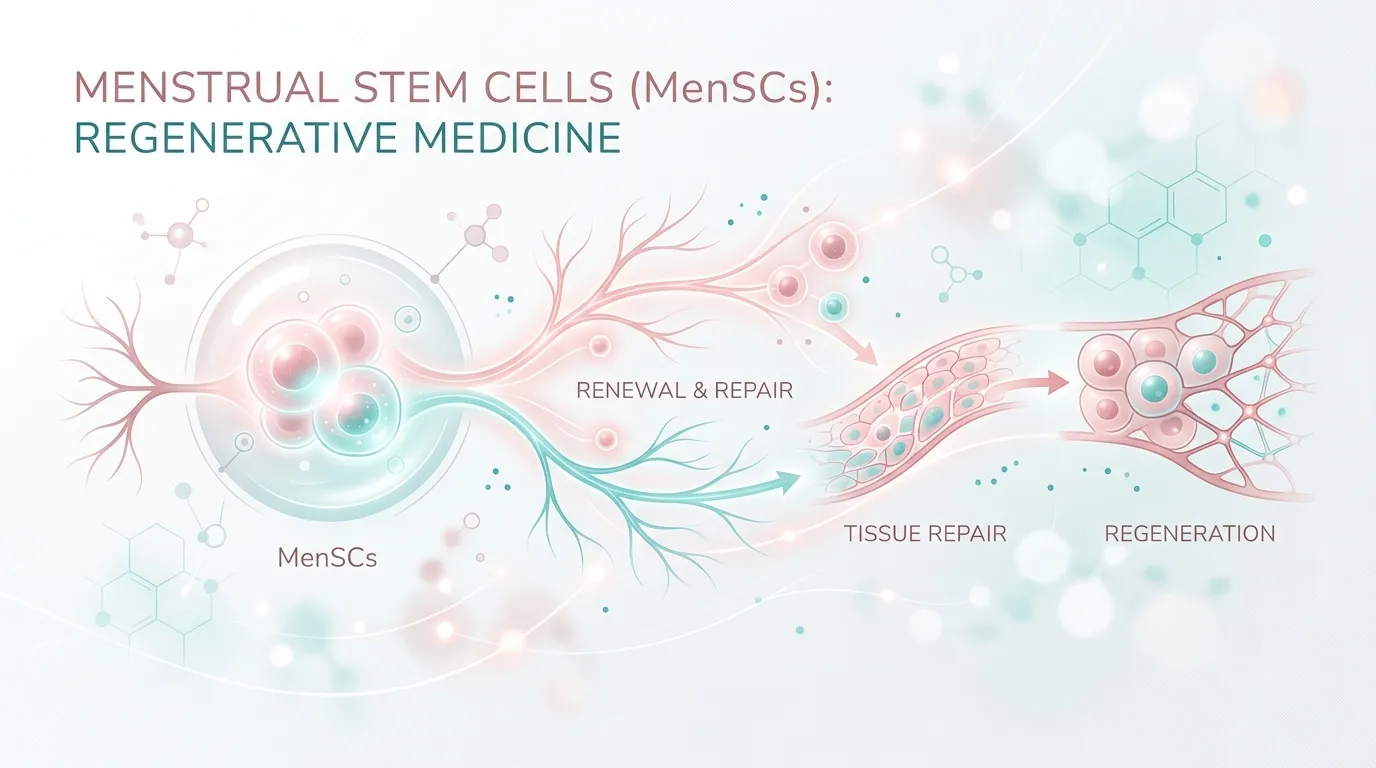
For decades, menstrual blood has been viewed simply as a biological byproduct to be discarded. But science is shifting that narrative in a groundbreaking way. Today, researchers are unlocking the incredible power hidden within menstrual fluid: Menstrual Stem Cells (MenSCs). What was once dismissed as waste is now proving to be one of the richest, most ethical, and most accessible sources of regenerative medicine available.
What Are Stem Cells?
Think of standard cells in your body—like skin cells, muscle cells, or red blood cells—as specialized workers with one specific job. A skin cell can only ever be a skin cell. Stem cells, on the other hand, are the body's raw materials. They are "blank slate" cells that haven't decided what they want to be yet. Under the right conditions, stem cells can divide and transform (or differentiate) into specific types of functional cells, such as heart tissue, nerve cells, or cartilage. Because of this unique ability to repair damaged tissues and replace dead cells, stem cells form the backbone of regenerative medicine.
Why Menstrual Blood is a Game-Changer
Historically, harvesting stem cells required invasive medical procedures:
- Bone Marrow: Extraction requires painful needles inserted into bone.
- Embryonic Stem Cells: Raises complex ethical debates.
- Umbilical Cord Blood: Can only be collected once per lifetime during childbirth.
The Menstrual Blood Advantage
- Non-Invasive Collection: Menstrual blood can be collected effortlessly using a sterile menstrual cup without pain, needles, or hospital stays.
- Abundant & Renewable: Women shed their uterine lining approximately once a month for decades. This makes menstrual stem cells a recurring, sustainable resource.
- Rapid Growth: MenSCs multiply much faster in laboratory cultures compared to stem cells harvested from bone marrow or fat.
- Low Immune Rejection: MenSCs have low immunogenicity, meaning they are less likely to be rejected by a recipient’s immune system, opening doors for therapeutic use in others.
How MenSCs Are Extracted and Used for Disease Treatments
The process of harvesting menstrual stem cells is straightforward:
- Collection: Menstrual fluid is gathered during peak flow days using a medical-grade, sterile menstrual cup without discomfort or surgical intervention.
- Isolation & Purification: In a certified laboratory, the fluid is filtered and processed to isolate viable mesenchymal-like stem cells.
- Expansion & Cryopreservation: The cells are multiplied in culture and can be safely cryopreserved for future regenerative therapies.
- Therapeutic Horizons: Researchers are investigating MenSCs for endometrial repair, premature ovarian insufficiency, wound healing, cardiac tissue recovery, and autoimmune conditions.
Dr. Sujata Mittal, Senior Gynaecologist & Oncologist, Famicare Speciality Centre, Rohini, New Delhi
Frequently Asked Questions
Is collecting menstrual stem cells painful or dangerous?
Not at all. Collection is completely non-invasive and painless, usually done using a standard sterile medical-grade menstrual cup during regular periods.
How do menstrual stem cells differ from bone marrow stem cells?
MenSCs can be collected without surgery or needles, proliferate at significantly faster rates in laboratory cultures, and can be collected repeatedly each month.
What medical conditions can menstrual stem cells treat?
Ongoing clinical research highlights their potential in uterine lining regeneration (Asherman's syndrome), premature ovarian failure, cardiac tissue recovery, and autoimmune disorders.
Interested in modern women's health and regenerative medicine? Consult with our specialists today.
Keep reading
View all → Cancer Awareness
Plastics, Pesticides, Processed Food and Deodorants: What Really Raises Breast Cancer Risk?
Social media is full of alarming warnings about chemicals and food. The honest picture has three layers: risks with reasonable evidence, concerns that are plausible but unproven, and popular myths.
 Cancer Screening
Thermography and Other Non-Invasive Breast Tests: Do They Work?
Many women hope for a painless, radiation-free test that can replace the mammogram. Here is what the evidence says.
 Cancer Screening
Which Tests Should a Woman Take? BSE, Mammography, Ultrasound and More
Finding breast cancer early is the most powerful thing a woman can do for herself. Several tests work together, each with its own role.