
Advanced Lung Cancer (Stage IV & SCLC): Targeted Therapies, ADCs & T-Cell Engagers
Metastatic lung cancer is no longer an immediate death sentence. Discover how precision kinase inhibitors, antibody-drug conjugates (ADCs), and bispecific T-cell engagers are transforming Stage IV NSCLC and Small Cell Lung Cancer into manageable chronic conditions.
Key Takeaways
- Stage IV NSCLC treatment begins with genomic profiling: patients with driver mutations take targeted oral tablets rather than conventional chemotherapy.
- Lorlatinib for ALK-positive disease has demonstrated 7-year progression-free survival, the longest ever documented in advanced NSCLC.
- New targeted agents approved in 2026 include zidesamtinib for ROS1 and sevabertinib for HER2-mutant non-squamous lung cancer.
- Antibody-Drug Conjugates (ADCs) like datopotamab deruxtecan and telisotuzumab vedotin deliver high-potency chemotherapy directly to tumor receptors.
- Small Cell Lung Cancer (SCLC) now benefits from consolidation durvalumab (ADRIATIC) and tarlatamab, a bispecific T-cell engager targeting DLL3.
In Stage IV lung cancer, malignant cells have migrated beyond the chest cavity to distant organs such as the bones, liver, adrenal glands, or brain. While metastatic lung cancer is rarely curative in the classical surgical sense, paradigm shifts in precision oncology now allow patients to achieve disease control, preserved functional independence, and meaningful quality of life spanning years. The initial fork in the road is biological: does the tumor harbor an oncogenic driver mutation, or does it rely on immune checkpoint pathways? Simultaneously, dramatic treatment breakthroughs have arrived for Small Cell Lung Cancer (SCLC)—historically one of oncology's most aggressive malignancies.
Stage IV NSCLC With Driver Mutations: Oral Precision Tablets
When an actionable genomic driver is detected, targeted tyrosine kinase inhibitors (TKIs) replace standard intravenous chemotherapy as the first-line treatment of choice:
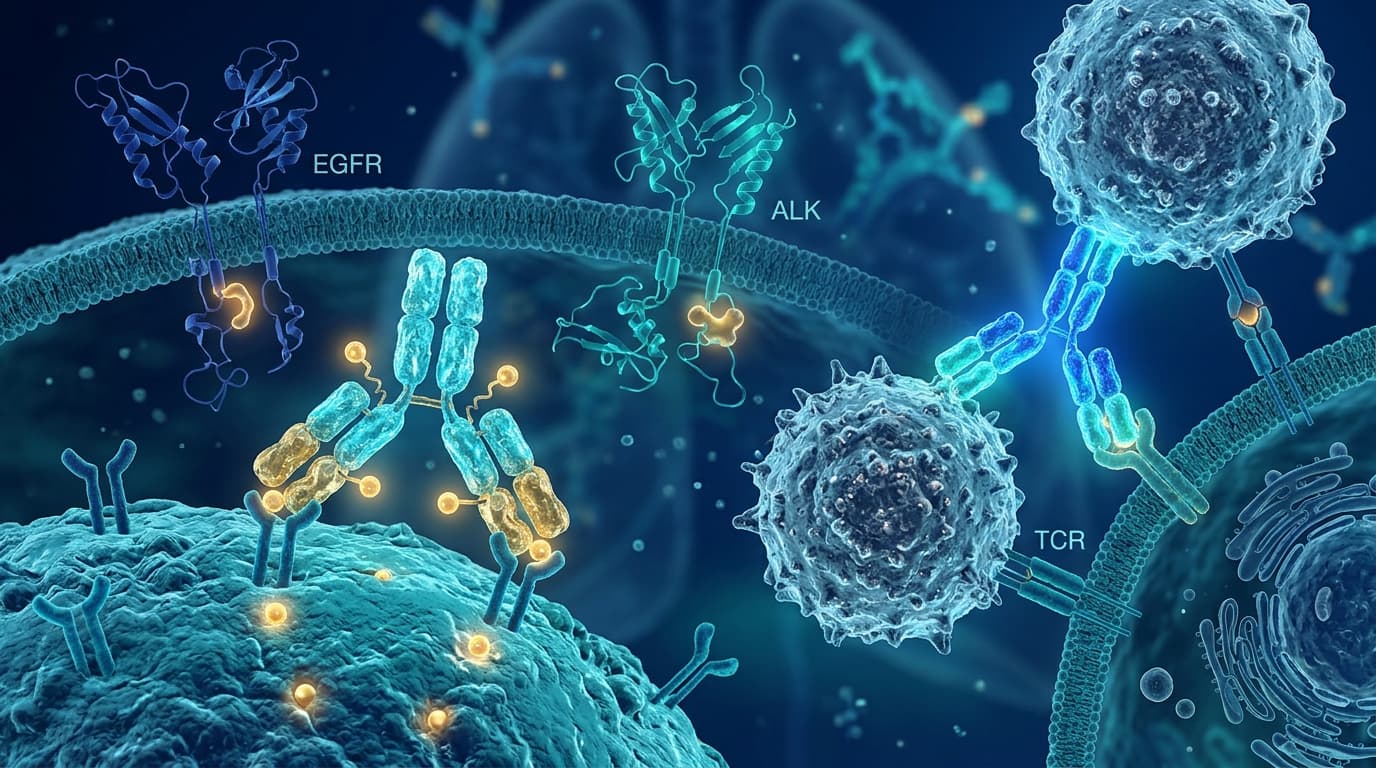
- EGFR Mutations: Osimertinib (either monotherapy or combined with platinum pemetrexed chemotherapy) delivers high systemic and central nervous system (CNS) disease control.
- ALK Rearrangements: Alectinib or lorlatinib serve as premier first-line therapies. Remarkable 7-year follow-up data for lorlatinib documented the longest progression-free survival ever reported in advanced NSCLC, with superior protection against brain metastases.
- ROS1 & HER2 Approvals: In 2026, the FDA approved zidesamtinib for previously treated ROS1-positive disease, and sevabertinib for HER2-mutant non-squamous NSCLC (including first-line use).
- RET, MET & KRAS G12C: Specific oral inhibitors (selpercatinib, capmatinib, sotorasib, adagrasib) offer tailored alternatives, with KRAS G12C combinations rapidly moving into first-line settings.
Stage IV NSCLC Without Driver Mutations: The Power of Immunotherapy
For tumors without actionable driver alterations, therapy is directed by PD-L1 expression levels on tumor cells:
- High PD-L1 (TPS >= 50%): Monotherapy with immune checkpoint inhibitors (pembrolizumab, atezolizumab, or cemiplimab) stimulates the patient's own T cells without the toxicity of chemotherapy.
- Low or Negative PD-L1: Dual therapy combining platinum doublet chemotherapy with immune checkpoint blockade overcomes immune evasion and ensures rapid tumor reduction.
Antibody-Drug Conjugates (ADCs) & Bispecific Antibodies
ADCs represent 'biological smart bombs'—engineered monoclonal antibodies linked to potent cytotoxic payloads that release their drug only upon binding tumor-specific surface proteins:
- Datopotamab Deruxtecan (Dato-DXd): Validated and approved for pretreated EGFR-mutated NSCLC, circumventing traditional resistance mechanisms.
- Telisotuzumab Vedotin: Targets tumors overexpressing c-Met protein, delivering targeted cell death.
- Bispecific Antibodies (Ivonescimab): Novel dual-action antibodies that simultaneously neutralize PD-1 and VEGF pathways, showing remarkable anti-tumor synergy in squamous and non-squamous NSCLC.
Small Cell Lung Cancer (SCLC): Major Therapeutic Leaps
SCLC is notoriously rapid-growing but uniquely responsive to modern immunotherapy combinations:
- Limited-Stage SCLC: Standard chemoradiotherapy followed by consolidative durvalumab (based on the landmark ADRIATIC trial) significantly prolongs overall survival.
- Extensive-Stage SCLC: Frontline chemotherapy combined with atezolizumab or durvalumab, with maintenance lurbinectedin plus atezolizumab approved in 2025 (IMforte trial).
- Relapsed SCLC & Tarlatamab: Tarlatamab—a first-in-class bispecific T-cell engager (BiTE)—physically links patient cytotoxic T cells directly to DLL3 proteins on SCLC cells, demonstrating superior survival over standard chemotherapy.
Oligometastases, Brain Protection & Early Palliative Care
Two vital clinical principles reshape Stage IV lung cancer outcomes: First, patients with oligometastatic disease (isolated spread to 1-3 sites) benefit from stereotactic radiosurgery (SRS) or surgical ablation alongside systemic tablets. Second, palliative care must begin at diagnosis rather than end-of-life—proactively addressing pain, dyspnea, nutrition, and psychological resilience improves both survival duration and quality of life.
Dr. Sujata Mittal, Senior Surgical & Gynaecologic Oncologist, Famicare Speciality Center, Rohini, Delhi
Frequently Asked Questions
Is Stage 4 lung cancer automatically a death sentence?
No. With modern targeted therapies, immunotherapy, and ADCs, many Stage IV lung cancer patients live for multiple years with excellent physical function and controlled disease.
What is an Antibody-Drug Conjugate (ADC)?
An ADC is a targeted cancer treatment where a specific antibody tracks down cancer cells and releases a concentrated chemotherapy payload directly inside the tumor, sparing normal healthy cells.
How are brain metastases managed in modern lung cancer?
Modern 3rd-generation targeted tablets (such as osimertinib and lorlatinib) cross the blood-brain barrier effectively. Combined with non-invasive Stereotactic Radiosurgery (SRS), brain metastases can be controlled without whole-brain radiation.
References
Schedule an in-depth oncology evaluation or treatment review with Dr. Sujata Mittal at Famicare Speciality Center, Rohini.
Related Articles & Latest Clinical Guides
Continue exploring evidence-based oncology, cervical cancer prevention, and wellness insights.
 Cancer Care
Lung Cancer Treatment (Early Stages I to III): Molecular Biomarkers, Surgery & PACIFIC Protocol
Lung cancer management has transformed. From mandatory multi-gene biomarker panels to robotic lobectomy and perioperative immunotherapy, understand how Stage I to III lung cancer is treated today with curative intent.
 Integrative Medicine
The Control Panel of Your DNA: How Your Lifestyle Rewrites Your Health
Your DNA is the permanent hardware, but epigenetics provides the software bookmarks. Discover how daily habits can activate tumor suppressor genes and rewrite your health blueprint.
 Cancer Awareness
Demystifying Cancer Jargon: A Plain-English Guide to 8 Essential Terms
Hearing words like angiogenesis, apoptosis, or HER2 can feel overwhelming. Here is an empowering translation of eight essential oncology terms using simple everyday analogies.