
Recurrent and Ectopic Leiomyoma after Hysterectomy: The Critical Need for Cautious Laparoscopic Practice
While hysterectomy is generally curative for fibroids, a rare subset of patients develop recurrent myomas, parasitic myomas, or benign metastasizing leiomyoma (BML). Exploring the critical need for tissue containment, cautious laparoscopic practice, and balanced patient selection.
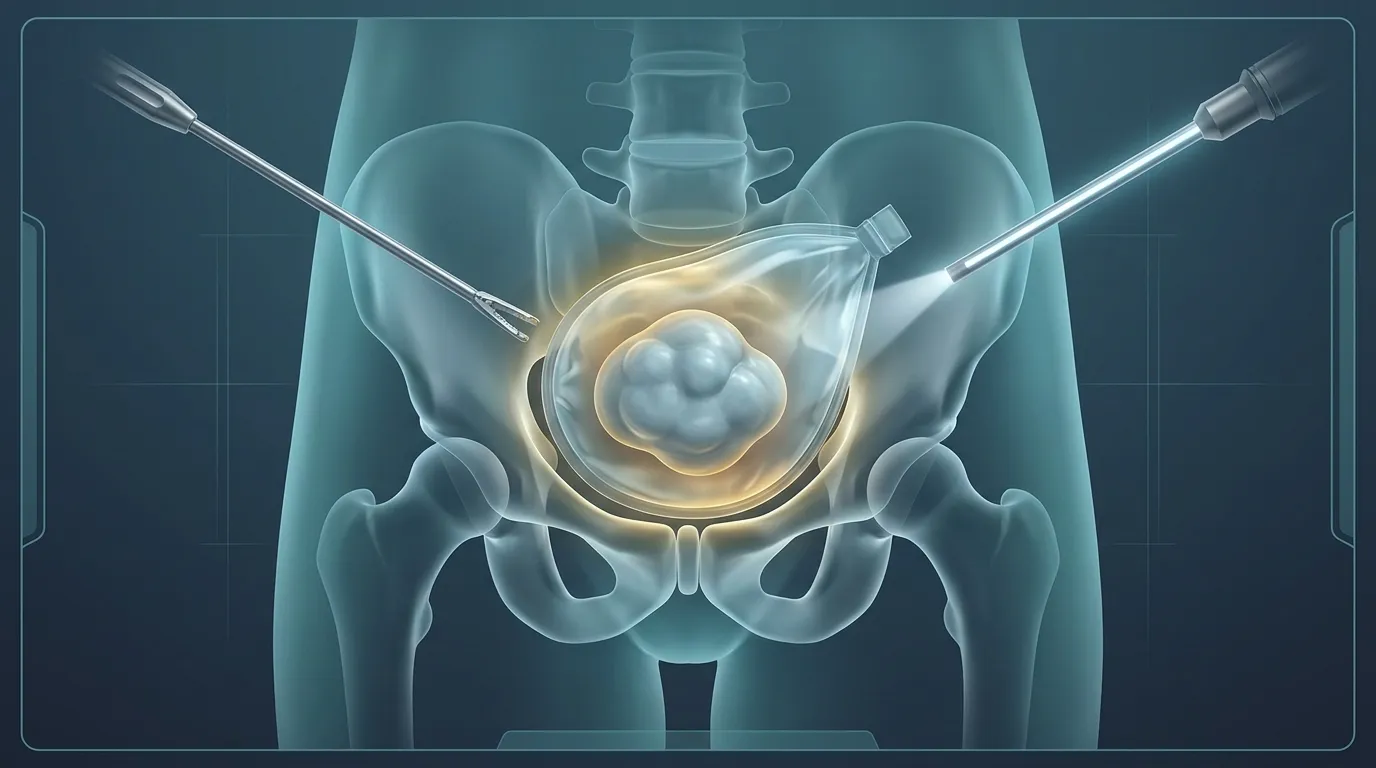
Key Takeaways
- Uterine leiomyomas (fibroids) are benign, but emergence of recurrent myomas, parasitic myomas, or benign metastasizing leiomyoma (BML) post-hysterectomy is an important surgical consideration.
- Parasitic myomas are predominantly iatrogenic complications of uncontained laparoscopic morcellation, where dispersed fragments implant on peritoneal surfaces and establish independent blood supply.
- Retrospective studies in patients undergoing repeat laparoscopy after uncontained power morcellation report parasitic myoma incidence as high as 18.4%.
- Subtotal hysterectomy retains cervical tissue, carrying a 1-5% baseline risk of recurrent fibroid formation in the cervical stump.
- Laparoscopic surgery involves limited tactile feedback and restricted visual fields; safer alternatives like contained in-bag morcellation, mini-laparotomy, colpotomy, or open TAH should be selected for high-risk or large specimens.
Uterine leiomyomas, commonly known as fibroids, are benign smooth muscle tumours that represent the most frequent indication for hysterectomy. While hysterectomy, whether complete or subtotal, is generally curative for fibroid-related symptoms, a rare but significant subset of patients may experience the emergence of recurrent myomas, parasitic myomas, or even the challenging diagnosis of benign metastasizing leiomyoma (BML) post-operatively. With rising minimally invasive surgeries, it is crucial to balance technology with safety and patient selection to prevent long-term complications of benign yet troublesome fibroid recurrences. Doctors as well patients should be aware of these problems and should opt for safer surgeries with best outcomes.
Terminology in Context: Differentiating the Post-Hysterectomy Leiomyoma Entities
To fully appreciate the complexities and risks, it's essential to clearly define the terminology:
- Recurrent Myoma / Recurrent Benign Leiomyoma: This term generally refers to the reappearance of benign fibroid tissue within the pelvis or abdomen after a hysterectomy. While some cases might represent de novo growth from residual mesenchymal cells, a significant proportion, especially after subtotal hysterectomy or morcellation, are attributed to residual microscopic tissue or macroscopic fragments left behind during the initial surgery. After a total hysterectomy, true recurrence from residual uterine tissue is exceedingly rare, as the entire uterus, including the cervix, is removed.
- Parasitic Myoma: These are extra-uterine fibroid fragments that, having detached from the uterus (or a previously existing fibroid), implant onto other peritoneal surfaces—such as the omentum, broad ligament, pelvic sidewall, bowel, or even trocar sites—and establish an independent blood supply, growing into new lesions. This phenomenon is predominantly an iatrogenic complication of laparoscopic procedures involving tissue morcellation, where small viable pieces of fibroid tissue are inadvertently dispersed within the abdominal cavity.
- Benign Metastasizing Leiomyoma (BML): BML is a distinct and rare condition characterized by the spread of histologically benign leiomyoma cells to distant sites, most commonly the lungs, but also lymph nodes, heart, bones, and other soft tissues. Despite the term "metastasizing," these lesions are not malignant and typically exhibit slow growth. The exact mechanism of spread is not fully understood but is thought to involve hematogenous (bloodstream) or lymphatic dissemination of benign cells from the original uterine leiomyoma. However, if an undiagnosed BML is present, or if the original uterine tumour was a low-grade leiomyosarcoma masquerading as a benign fibroid, uncontained morcellation can dramatically worsen the patient's prognosis by spreading these cells throughout the peritoneal cavity. So, rapidly growing tumours and certain high-risk features associated with fibroids should be kept in mind and taken care off.
Incidence: Unveiling the Underestimated Risk
The true incidence of these complications, particularly parasitic myomas and other forms of iatrogenic seeding, is likely underestimated. Many cases may be asymptomatic or only discovered incidentally during subsequent surgeries for unrelated issues.
- Parasitic Myomas: While often cited as rare, the reported incidence of parasitic myomas following laparoscopic uterine surgeries involving morcellation varies, generally ranging from approximately 0.12% to 0.95% of all such procedures or laparoscopic myomectomies specifically, some studies report rates between 0.20% and 1.25%.(1) However, more recent retrospective studies that actively looked for these occurrences, especially in patients undergoing repeat laparoscopic procedures after uncontained power morcellation, have reported significantly higher figures. In one retrospective study focusing on 87 laparoscopic myomectomy cases using uncontained power morcellation found a startling parasitic myoma incidence of 18.4%, although many of these were asymptomatic.(2) These higher figures strongly suggest that the actual incidence of parasitic myoma may be considerably higher than traditionally reported, especially when tissue containment is not rigorously used or expertise is not adequate.
- Recurrent Myoma after Subtotal Hysterectomy (Cervical Stump Fibroid): The incidence of a new fibroid growing in the retained cervical stump after subtotal hysterectomy is relatively low, generally reported to be between 1-5%. This risk is inherent to the preservation of cervical tissue.
- Benign Metastasizing Leiomyoma (BML): This condition is exceedingly rare, with only a few hundred cases reported in medical literature. Given its rarity, obtaining a precise incidence rate is challenging, but it represents an infrequent event.
Why Laparoscopy (Especially TLH with Morcellation) Increases Risk
The primary mechanisms and factors that increase the risk of recurrent and parasitic myomas in laparoscopic procedures include:
- Tissue Spillage and Morcellation: Power morcellation mechanically fragments the uterine specimen or fibroid within the peritoneal cavity. This process invariably generates small fragments and droplets of tissue that can escape containment and scatter widely.
- Large uterine or fibroid size – larger specimens increase tissue residual risk and requires fragmenting.(2,3)
- Limited Tactile Feedback: Unlike open surgery, laparoscopic procedures provide limited tactile feedback, making it challenging to identify and remove every microscopic fragment of tissue, especially after morcellation.(4)
- Visual Limitations: While laparoscopy offers magnified views, the surgeon's field of vision is restricted, making it difficult to detect and remove all dispersed fragments that might be propelled into less accessible areas of the abdominal cavity.(5)
- Expertise: There is huge gap in training for laparoscopic gynaecologists/surgeons as equipment is costly and training is time dependent as well as number of cases operated.
Comparison: Total Abdominal Hysterectomy (TAH) vs. Total Laparoscopic Hysterectomy (TLH)
A direct comparison highlights the differing risk profiles:
- Total Abdominal Hysterectomy (TAH) Advantages: TAH allows for the intact removal of the entire uterus (and fibroids), virtually eliminating the risk of iatrogenic parasitic myoma formation from tissue spillage. The surgeon has direct visualization and tactile feedback, ensuring complete removal of the targeted tissue. There is no risk of disseminating an undiagnosed malignancy through morcellation.
- Total Abdominal Hysterectomy (TAH) Disadvantages: TAH involves a larger abdominal incision, leading to more postoperative pain, a longer hospital stay, a longer recovery period. It also carries a higher risk of wound complications.
- Total Laparoscopic Hysterectomy (TLH) Advantages: TLH offers significant benefits in terms of patient recovery, including reduced blood loss, smaller incisions (leading to better cosmesis), less postoperative pain, shorter hospital stays, and a faster return to normal activities.(6)
- Total Laparoscopic Hysterectomy (TLH) Disadvantages: The primary drawback is the increased risk of iatrogenic complications directly related to tissue morcellation, lack of experience, costly equipment and increasing cost of surgery to the patient.
The primary concern with laparoscopy, especially when dealing with large uteri or fibroids, is the use of power morcellation. This device fragments tissue inside the abdominal cavity for extraction through small ports. However, this process carries a substantial risk of spillage, where viable benign fibroid cells are disseminated. These shed fragments can then implant on surrounding organs and develop their own blood supply. And again, availability of instruments, surgeon’s skills and patient’s age and choices matter. Still, informed consent regarding same should be taken.
Emphasizing Alternatives to Power Morcellation
To prevent iatrogenic tissue seeding and recurrence, the following alternatives and protective modalities should be prioritized:
- 1. Mini-Laparotomy (Mini-Lap)
- 2. Vaginal Extraction (Colpotomy)
- 3. Contained Morcellation (in a bag)(7)
- 4. Tissue Extraction via Enlarged Port
- 5. Non-Surgical Management
- 6. Traditional Open Hysterectomy
In conclusion, with rising minimally invasive surgeries, it is crucial to balance technology with safety and patient selection to prevent long-term complications of benign yet troublesome fibroid recurrences. Doctors as well patients should be well aware of these problems and should opt for safer surgeries with best outcomes.
Frequently Asked Questions
Can fibroids recur after a total hysterectomy?
After a total hysterectomy where both the uterus and cervix are completely removed, true recurrence from uterine tissue is exceedingly rare. However, parasitic myomas can arise on peritoneal surfaces if viable fibroid fragments were disseminated during prior laparoscopic morcellation.
What causes parasitic leiomyomas after laparoscopic surgery?
Parasitic myomas are primarily an iatrogenic complication resulting from tissue morcellation, where uncontained fragments of fibroid tissue disperse within the peritoneal cavity, implant onto organs like the omentum or bowel, and develop an independent vascular supply.
How can surgical tissue spillage be prevented during minimally invasive fibroid surgery?
Surgical tissue dissemination can be prevented by employing contained in-bag morcellation, vaginal colpotomy extraction, mini-laparotomy, or traditional open abdominal hysterectomy (TAH) when dealing with large or suspicious specimens.
References
- 1.Wang, J., Liu, G. & Yang, Q. Parasitic myoma after transabdominal hysterectomy for fibroids: a case report. BMC Women's Health 23, 310 (2023).
- 2.Murakami K, Kitade M, Kumakiri J, et al. Incidence and risk factors of parasitic myoma after laparoscopic myomectomy using uncontained power morcellation. J Obstet Gynaecol Res. 2024 Nov;50(11):2131-2137.
- 3.Paul, P. G.; Shintre, Hemant; Mehta, Santwan; et al. Parasitic Myomas: An Unusual Risk after Morcellation. Gynecology and Minimally Invasive Therapy 7(3):p 124-126, 2018.
- 4.Maria Watshaug. The Role of Tactile Feedback in Laparoscopic Surgery. Surgical Laparoscopy Endoscopy & Percutaneous Techniques 16(6):390-400, 2007.
- 5.Patil M Jr, Gharde P, Reddy K, Nayak K. Comparative Analysis of Laparoscopic Versus Open Procedures in Specific General Surgical Interventions. Cureus. 2024.
- 6.Brian R, Davis G, Park KM, Alseidi A. Evolution of laparoscopic education and the laparoscopic learning curve: a review of the literature. Laparosc Surg 2022;6:34.
- 7.Kusakabe et al. Recurrent Abdominal Pain Caused by a Parasitic Leiomyoma Containing Endometrial Cells Following Laparoscopic Hysterectomy. Cureus 17(5): e84391.
Discuss personalized, safe surgical and non-surgical fibroid treatment options: book a consultation with Dr. Sujata Mittal at Famicare Speciality Center, Rohini.
Related Articles & Latest Clinical Guides
Continue exploring evidence-based oncology, cervical cancer prevention, and wellness insights.
 Cancer Prevention
Public Health Priorities in India: IMR, NPAFP, Vaccine Sequencing & Cervical Cancer Screening
Examining India's infant mortality rate (IMR), Dr. Jacob Puliyel's NPAFP findings, Peter Aaby's BMJ/Lancet vaccine sequencing research, and the ₹1,300 crore annual HPV vaccine commitment versus India's 1-3% cervical cancer screening coverage.
 Integrative Medicine
Insulin Resistance and PCOS in Young Girls: How Late Nights and Fast Food Rewrite Hormones
Polycystic ovary syndrome (PCOS) affects one in ten women worldwide, with insulin resistance sitting at its core—even in lean teenage girls. Discover how circadian misalignment and modern diets disrupt the HPO axis and how ancient lifestyle wisdom can help reset it.
 Cancer Care
Advanced Lung Cancer (Stage IV & SCLC): Targeted Therapies, ADCs & T-Cell Engagers
Metastatic lung cancer is no longer an immediate death sentence. Discover how precision kinase inhibitors, antibody-drug conjugates (ADCs), and bispecific T-cell engagers are transforming Stage IV NSCLC and Small Cell Lung Cancer into manageable chronic conditions.